Witlingo is a resident communication platform built for affordable housing organizations, Public Housing Authorities, property management companies, senior living communities, and other organizations that need to communicate reliably with residents.
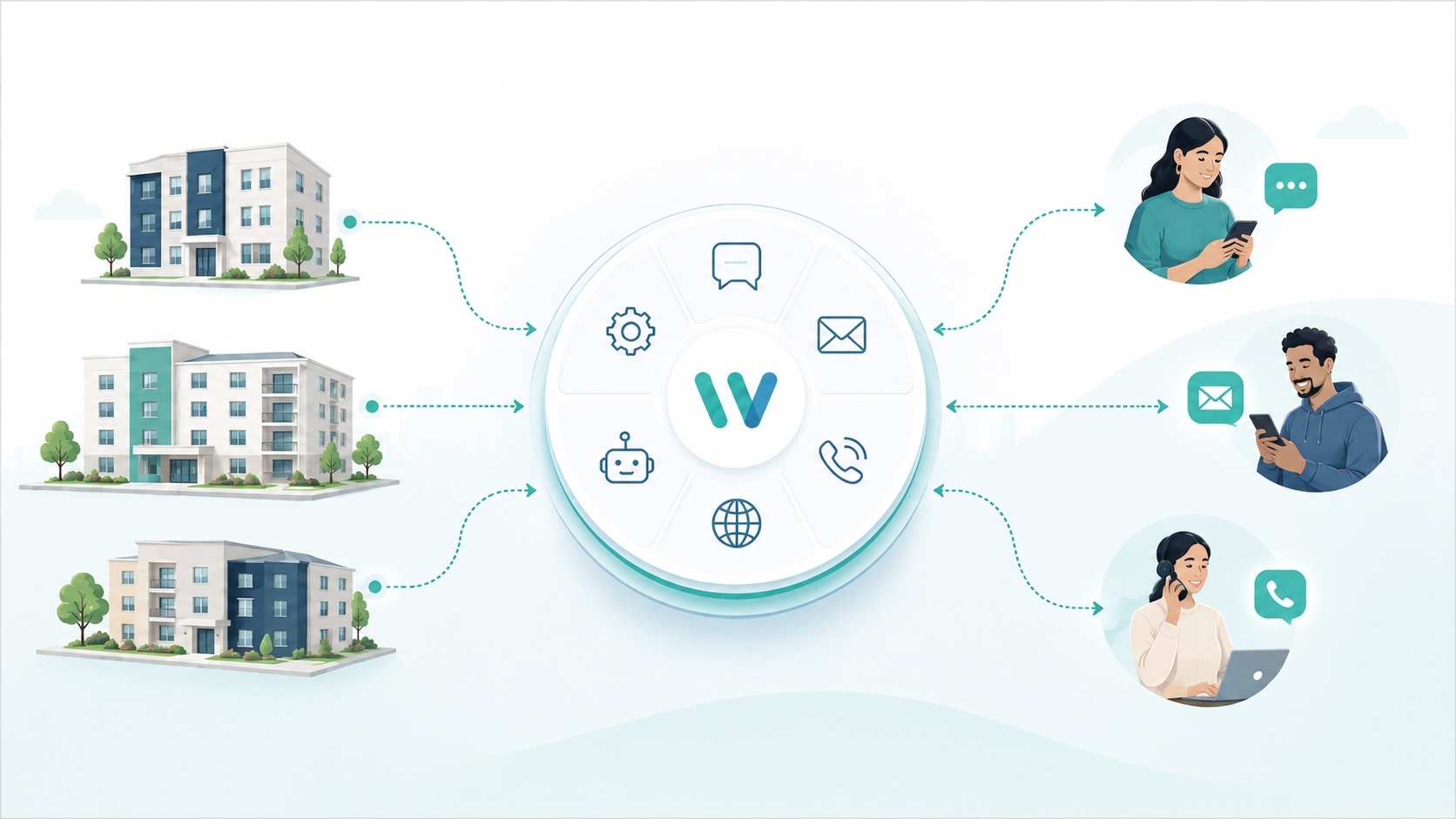
Staff create a message once and reach residents through multiple channels, including text messages, automated phone calls, email, mobile apps, supported smart speakers, and the web.
Messages can be automatically delivered in more than 50 languages, helping organizations communicate more effectively with residents who speak different languages or have different communication preferences.
But Witlingo goes beyond simply sending messages. It helps organizations manage resident deadlines, automate reminders, document Proof of Delivery, track responses, monitor communication activity, and give managers visibility across properties.
The goal is simple: make sure the right information reaches the right resident, at the right time, in the right language, and through the right channel.
| Channel / Feature | What it enables / Why it matters |
|---|---|
| Text Messages (SMS) | Fast, direct communication for reminders, notices, schedule changes, deadlines, emergencies, and everyday updates. |
| Automated Phone Calls | Reach residents who prefer voice communication or may not regularly use smartphones, email, or text. |
| Useful for longer communications, documents, newsletters, notices, and detailed information. | |
| Resident Mobile App | Residents can receive messages, reply to notifications, and access information from their community in one place. The app can operate over Wi-Fi even when the resident does not have an active mobile data plan. |
| Staff Mobile App | Gives property managers, service coordinators, and other staff another way to communicate and manage resident outreach while away from their desks. |
| Smart-Speaker / Voice Delivery | Allows residents to hear information rather than read it, providing another accessible communication option. |
| Web | Residents can access information and content through browser-based experiences without requiring another communication channel. |
| NFC — Tap to Access | Personalized NFC tags give residents a permanent place in their home where they can tap their phone to access the latest information intended for them—without an app or password. |
Witlingo can automatically deliver communications in more than 50 languages.
Staff can create a message once while residents receive it in the language most appropriate for them. This reduces the need for staff to manually translate notices or depend on family members and other intermediaries.
Residents can also receive information as text or audio, helping organizations communicate across differences in language, literacy, technology use, and communication preference.
Deadline Tracking
Witlingo helps staff keep track of resident deadlines and proactively communicate before those deadlines are missed.
Staff can see deadlines that are approaching, overdue, or completed and use automated communication sequences to remind residents of required actions.
Deadlines can include:
- Recertifications
- Document submissions
- Appointments
- Inspections
- Lease renewals
- Rent-related deadlines
- Required meetings
- Other resident obligations
Instead of depending on spreadsheets, calendars, sticky notes, and staff memory, communication can begin automatically based on the resident's deadline.
Recertification Reminders
Annual recertification is one of the most important recurring workflows in affordable housing.
Witlingo allows staff to enter or upload resident recertification dates and automatically send reminders at predetermined intervals—for example, 60, 30, 14, 7, and 1 day before the deadline.
Residents can receive those reminders through text, automated phone call, email, mobile app, and their preferred language.
Staff can then see which reminders were sent, which channel and language were used, whether the message was delivered, and which residents may still require manual follow-up.
Sending a notice is not the same as knowing that communication occurred.
Witlingo provides a documented record of resident communications that can include:
- Date and time sent
- Resident recipients
- Channel used
- Language used
- Delivery confirmation
- Link activity
- Phone-call pickup and duration
- Resident responses
- Follow-up activity
This gives property staff, regional managers, compliance teams, and executives a more complete and reviewable communication record.
For affordable housing organizations and PHAs, that can be especially valuable when communication needs to be demonstrated during audits, disputes, compliance reviews, or resident inquiries.
Communication does not always end when the message is sent.
Residents can respond to supported communications, allowing staff to see resident questions, acknowledgments, and other feedback without forcing every interaction into a phone call or office visit.
For multilingual communities, Witlingo can help bridge the language gap between the resident and staff.
Witlingo is designed not only for frontline staff but also for the managers responsible for multiple communities.
Property managers, regional managers, compliance teams, and executives can gain visibility into communication activity across properties, including what is being sent, which residents are being reached, which languages and channels are being used, and where follow-up may still be required.
This turns resident communication from a collection of disconnected staff activities into something management can see, measure, and improve.
For community activities, meetings, classes, programs, and events, staff can track resident participation directly through Witlingo.
This gives organizations a better understanding of which programs residents actually attend and provides a clearer connection between communication, sign-ups, and participation.
Resident communication is not limited to short messages.
Staff can share documents, informational pages, sign-up opportunities, audio content, resources, and other material through Witlingo.
This allows a short notification to direct a resident to the full information they need without trying to fit everything into an SMS message.
Staff can send a notification immediately, schedule it for later, or establish recurring communications.
For deadline-driven workflows, reminders can be triggered based on the date associated with an individual resident.
This makes Witlingo useful for both everyday communications and structured workflows that need to happen reliably over weeks or months.
Property managers can use Witlingo to communicate about:
- Recertifications
- Inspections
- Rent reminders
- Missing documents
- Maintenance entry
- Appointments
- Policy notices
- Community meetings
- Emergency notifications
- Schedule changes
The platform helps reduce repetitive calls, manual follow-up, and uncertainty over whether residents were reached.
Service Coordinators can use Witlingo for:
- Activities and events
- Food pantry notices
- Health and wellness programs
- Transportation
- Classes
- Resident services
- Community resources
- Appointment reminders
- Last-minute cancellations
- General community announcements
Instead of maintaining separate texting, calling, emailing, flyer, and translation processes, staff can coordinate communication from one platform.
For organizations operating multiple properties, Witlingo provides visibility beyond an individual community.
Management can better understand communication activity across the portfolio and identify inconsistencies, gaps, and areas requiring attention.
That makes Witlingo useful not simply as a messaging tool, but as a resident communication operating layer across the organization.
Housing Authorities already have systems that track properties, residents, work orders, compliance requirements, and administrative processes.
But those systems do not necessarily solve the final communication problem:
Did the resident receive the message? Did they understand what was expected? Did they respond in time?
Witlingo helps close that communication gap by reaching residents across multiple channels and languages while documenting the communication and identifying residents who may still need attention.
Senior living communities can use the same communication infrastructure for:
- Activities
- Dining
- Transportation
- Wellness programs
- Schedule changes
- Community announcements
- Family communication
- Emergency updates
- Resident engagement
Multiple channels are particularly valuable in communities where residents vary widely in their comfort with smartphones and digital technology.
- Reach residents through the channels they actually use: Residents do not all communicate the same way. Some prefer text. Others answer the phone. Others rely on email, an app, a smart speaker, or the web. Witlingo allows organizations to use multiple channels without forcing staff to manage multiple communication systems.
- Communicate in the resident's language: More than 50 supported languages help staff communicate with increasingly diverse resident populations.
- Reduce repetitive manual work: Automated reminders and scheduled communications reduce the amount of time staff spend making repetitive calls, sending individual emails, leaving voicemails, and following up manually.
- Stay ahead of deadlines: Deadline tracking moves communication from reactive to proactive by initiating reminders before an important resident obligation becomes a problem.
- Know what happened: Proof of Delivery gives staff and management a structured record of communication rather than relying on assumptions, screenshots, or memory.
- Give management visibility: Leadership can see communication activity across communities rather than having resident outreach disappear inside individual staff inboxes and phones.
- Use one platform across the organization: Property managers, service coordinators, regional teams, compliance staff, and executives can operate from the same communication infrastructure.
Witlingo is built around a simple idea:
Resident communication should not stop at sending a message.
- The objective is the outcome that follows.
- A resident completes a recertification.
- A resident arrives with the required documents.
- A resident knows that an inspection is scheduled.
- A resident attends an appointment.
- A resident shows up for an activity.
- A resident understands an important notice.
- And management can see that the communication happened.
That is the difference between simply sending notifications and building a resident communication system.
Schedule a demo and see how Witlingo helps communities communicate easily and effectively, track delivery, and document outreach.